


How can a water leak which should of only cost the landlord £38.50, help with making your health and safety easier?
When I came into the office Tuesday morning
Our office is an old converted barn with beautiful views of the Nottinghamshire countryside.
When opening our office door, I was welcomed by a wet patch on the floor. Looking up instantly, I could see water dripping from the ceiling. Quickly I got a bucket (as you do), I placed under the drip to prevent any more damage.
I immediately contacted the landlord, who promised to come over the following morning and fix the leak.
The Landlord arrived
The first task was to isolate the water and clear the bucket away.
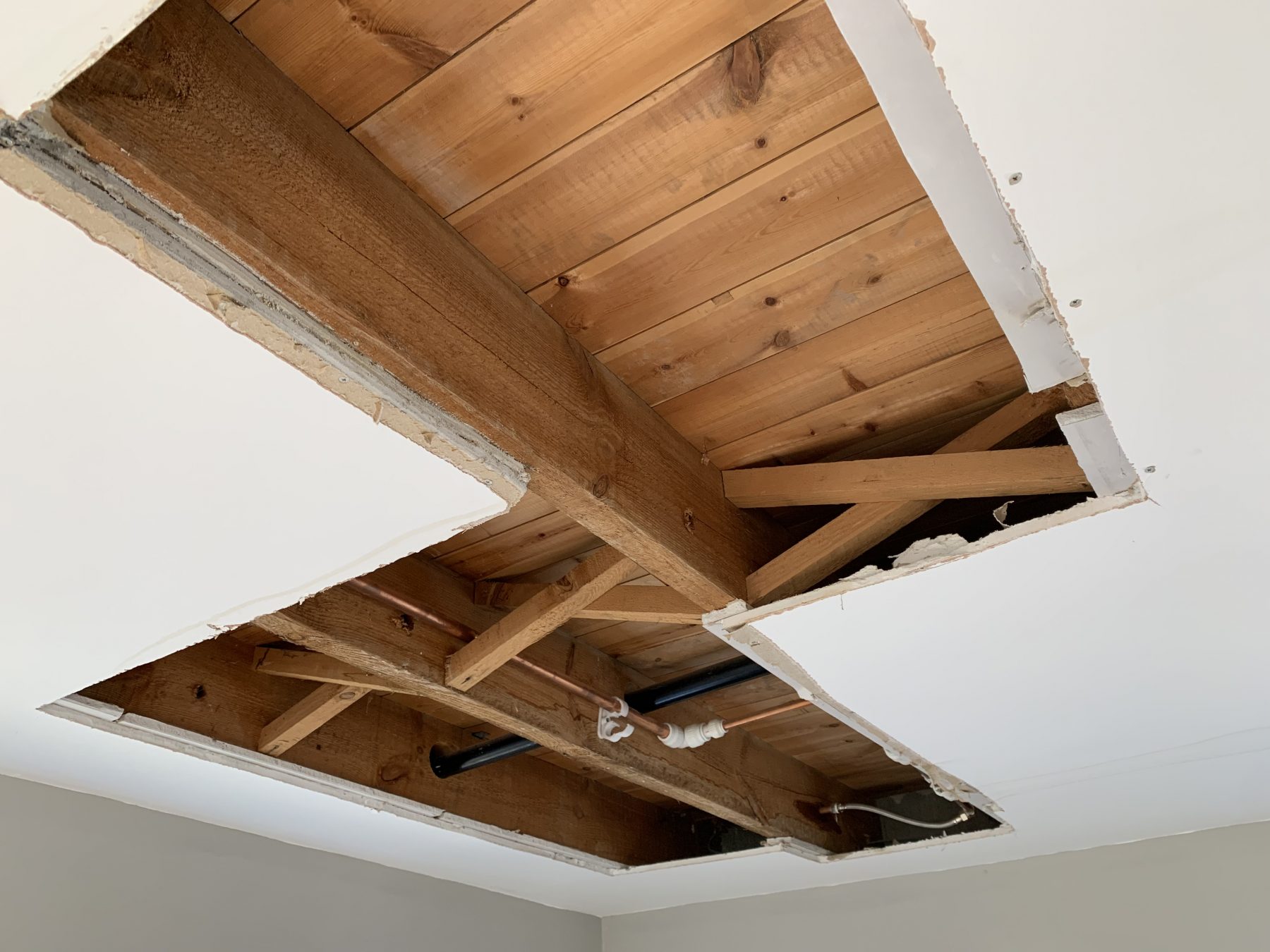
Using a plastic container as a means of access, the landlord precariously balancing, begun to cut away the plasterboard ceiling to expose the leak.
As we had no toilets or running water, after nearly 2 hours on the landlords banging and cursing, I asked the landlord,
‘how long before we have water back on’
He angry reply was
‘I’m going as fast as I can’
An hour or so later, still no water. One of our workers had to go off and get some bottled water for the kettle and use someone else’s facilities.
I did not want to mention to the landlord (who at this point had steam coming out of his ears). The Workplace (Health, Safety and Welfare) Regulations 1992. As if I had, I may have seen the blunt end of a spanner up close.
Another 2 hours passed and this relatively simple repair (his words not mine) was still ongoing. In our other office, we could all hear the banging and shouting coming from the out-of-bounds office. Wanting to check he was ok, I popped my head around the door nervously. I could see water gushing out of an exposed pipe in the ceiling and flooding all over my desk, table and filing cabinet.
Let’s sum this up: Five hours in and a small drip turned into an exposed pipe gushing water everywhere, creating an extensive amount of damage and an even bigger problem to solve – Not to even mention the stress and anger the landlord was feeling.
The right tools
I took it upon myself to call a ‘plumbing and heating’ company who use Safety PAL… “Do you have a plumber you could send round please?”
“yep, he will be with you in about 30 minutes”
The plumber arrived with tool bag in hand, put up his step ladder. Using a pipe cutter, cut out the old piece of damaged pipe and soldered in a new section – 23 minutes in total.
The plumbers’ invoice was £38.50
Why did the landlord struggle?
Because he did not use the correct tools or have the required level of competence.
He used an old saw and an oversised file to cut the pipe and smooth the end, this gave rise to poor joints which ultimately leaked.
He used old pliers instead of the correct size pipe spanner, this meant compression joints were not tightened, increasing the risk of a leak. Old copper joints were also used, which he must have had in his tool bag since the ’90s.
Furthermore, he used a plastic container to stand on, instead of a BS EN 131 ladder (sorry had to get that one in). All cultivating in a poorly completed job and a huge amount of water flooding over our office furniture and equipment, when he turned the water back on after he thought he’d successfully repaired the leak.
Great bloke, but not the right bloke
The landlord was a great bloke and good business person, as the property is amazing… But he wasn’t a plumber.
His failure to complete this simple task resulted in stress and anxiety, unhappy tenants and damaged equipment – Which the landlord had to sort out.
When the costs were added up, the damage was over £2050.
Furthermore, he was unable to claim on his insurance, as he failed to use a professional tradesman.
So in his attempt to save money, the landlords’ only success was to turn a £38.50 job into a £2050 loss.
So why this story?
I relate everything the landlord did to businesses I see attempting to manage (or not) health and safety – The similarity is people and companies failing to use the correct tools and adequate resource as the landlord in this story.
The unaware and inexperienced who use inefficient processes and badly designed systems, increase risk. And just like the landlord, go on to create bigger and more expensive problems.
Furthermore, in health and safety, failing to do what should be done, increases the risk of prosecution, and potentially comes with the sentence of imprisonment and even fatalities.
How many jobs can you think of, where stress and anxiety were increased. More resource used, all because of poor planning, wrong tools and badly informed workers… I suspect you can recall quite a few.
Using the correct tools will reduce your risk and save you money.
Safety PAL gives workers and contractors effective and efficient tools to complete the task once and safely.
Safety PAL gives management the right tools to ensure the workers have read, understood and are following the company policy and associated procedures.
Safety PAL gives the director the evidence and proof everything reasonably practicable has been done.
I hope this article makes you think about controlling, delivering and creating a safer and more functioning workforce.
Karl Spencer
Founder and Managing Director of Safety PAL.
Don't take our word for it,
we'll show you how...
Keeps Employees Safe
By providing training, managing and feedback systems that can be evidenced in 27 languages.
Reduces Risk of Accidents
Provides proof, to reduce your exposure to prosecution.
Provides Real-Time Reporting 24/7
Showing what has been completed, and what important tasks need to be done next.