Why We’re Putting Faces to Health & Safety
Health and safety is ultimately about people. It’s about the person working at height—the person operating the machinery. The person driving home after a long shift. The person who spots something that doesn’t look right but isn’t sure whether to speak up.
Behind every risk assessment, inspection, training course, safety alert and action is a person we’re trying to protect. And if we want people to think about safety, remember it, and act on it, we have to consider how we communicate with them.
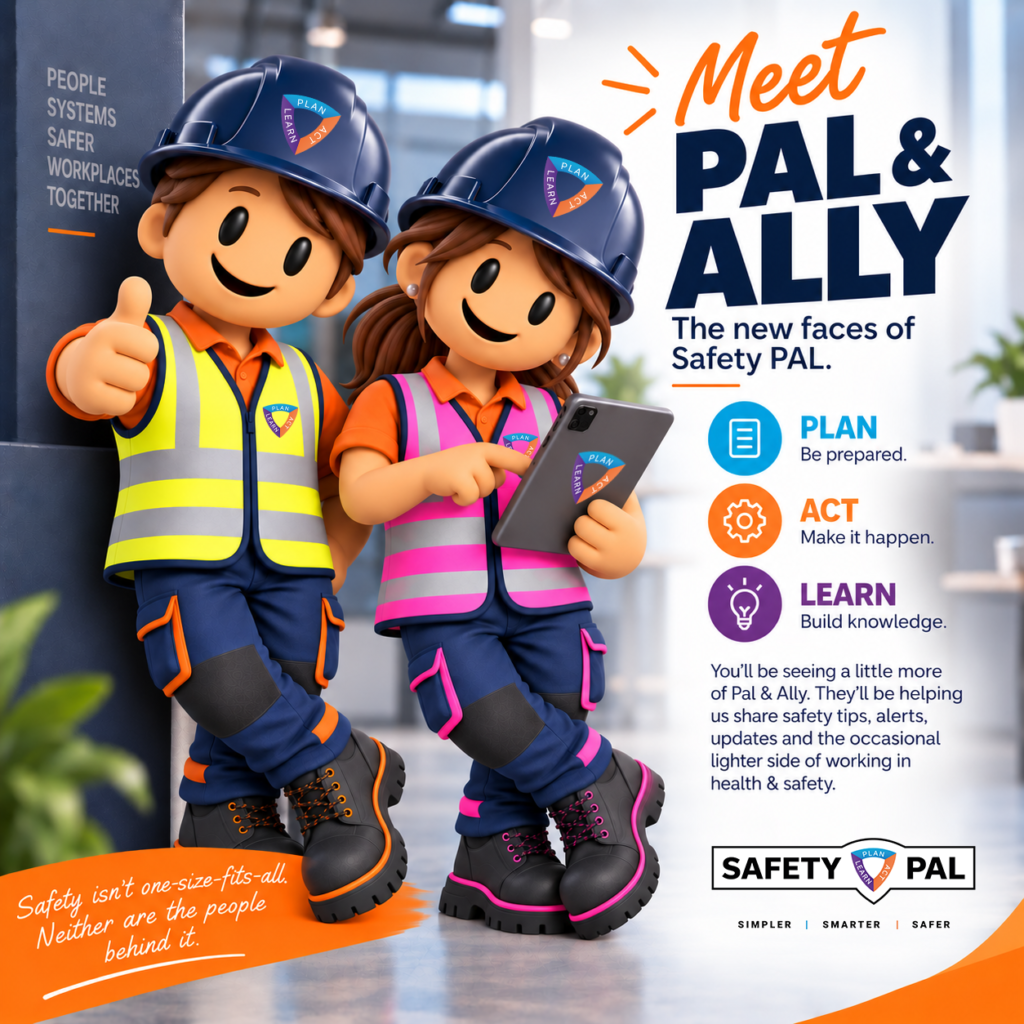
That’s why we’ve created Pal & Ally.
They’re the new faces of Safety PAL, but they’re much more than two characters we’ve added to make our content look different. They’re part of a deliberate decision to make health and safety communication more human, recognisable and engaging.
Because sometimes, putting a face to a message can help people connect with it.
People Connect with People.
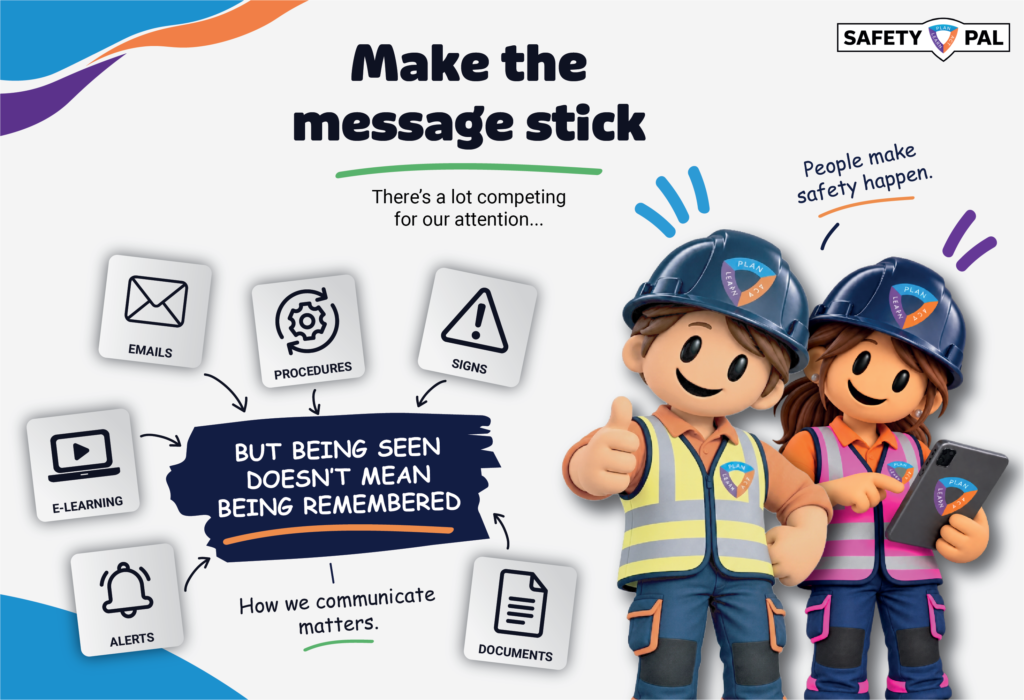
Think about the information you’re exposed to during an average working day. Emails. Signs. Procedures. Notifications. Training. Documents. Posters. Messages. Alerts.
A lot is competing for our attention. Health and safety information has to compete for that attention too.
And simply putting important information in front of somebody doesn’t necessarily mean they’ll engage with it, understand it or remember it.
People connect with stories, personalities, expressions and emotions. A familiar face can make us stop. A character can help make information recognisable. A conversation between two people can communicate something very differently from another paragraph of instructions. And emotion can make a message stick.
That doesn’t make the information itself any less serious. It can make delivery more effective.
We often talk about health and safety in terms of processes, legislation, compliance, risk and control. All of those things matter. But another part of safety can’t be captured as easily on a spreadsheet.
How people feel.
- Do they feel comfortable speaking up?
- Do they feel confident asking a question?
- Do they understand why a control is in place, or are they simply following an instruction?
- Do they remember something from their training when they face the situation six months later?
- Do they feel that safety is something being done with them or to them?
Those things matter because people aren’t machines. Emotion influences attention, communication, and how we respond to information.
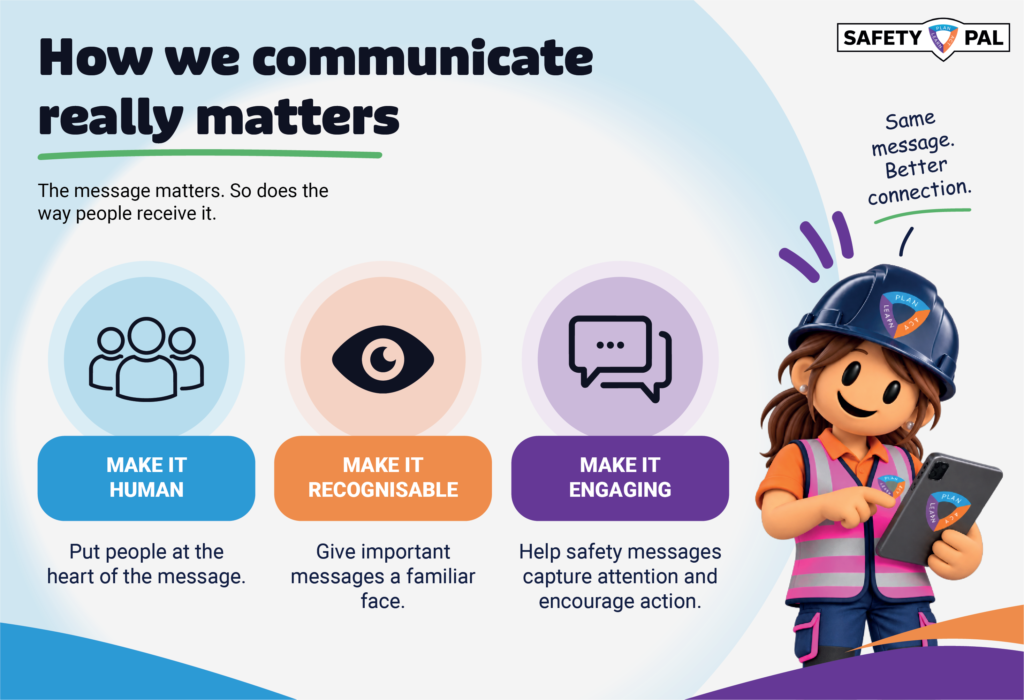
Pal & Ally offer another way to tap into the human side of health and safety. Not by changing the seriousness of the message, but by making it more relatable, recognisable, and memorable.
Serious Subject – Human Communication.
There’s no escaping the fact that health and safety deals with serious matters. It’s about preventing accidents, protecting people’s health, managing risk and making sure people return home safely at the end of their working day.
But serious information doesn’t always need to be presented in a serious, complicated or overly corporate way. Sometimes, that can have the opposite effect.
If everything looks and sounds the same, people can stop noticing it. If communication feels too technical, people may struggle to relate it to the job they’re actually doing.
And if safety only ever appears as another procedure, another instruction or another box to tick, we risk losing the very people we’re trying to reach.
We don’t want Pal & Ally to replace detailed guidance, competent advice, training or proper safety management. We want them to help us deliver those messages better.
Why Pal & Ally?
Choosing to create characters for a health and safety business wasn’t simply about making Safety PAL look friendlier. There was a purpose behind it.
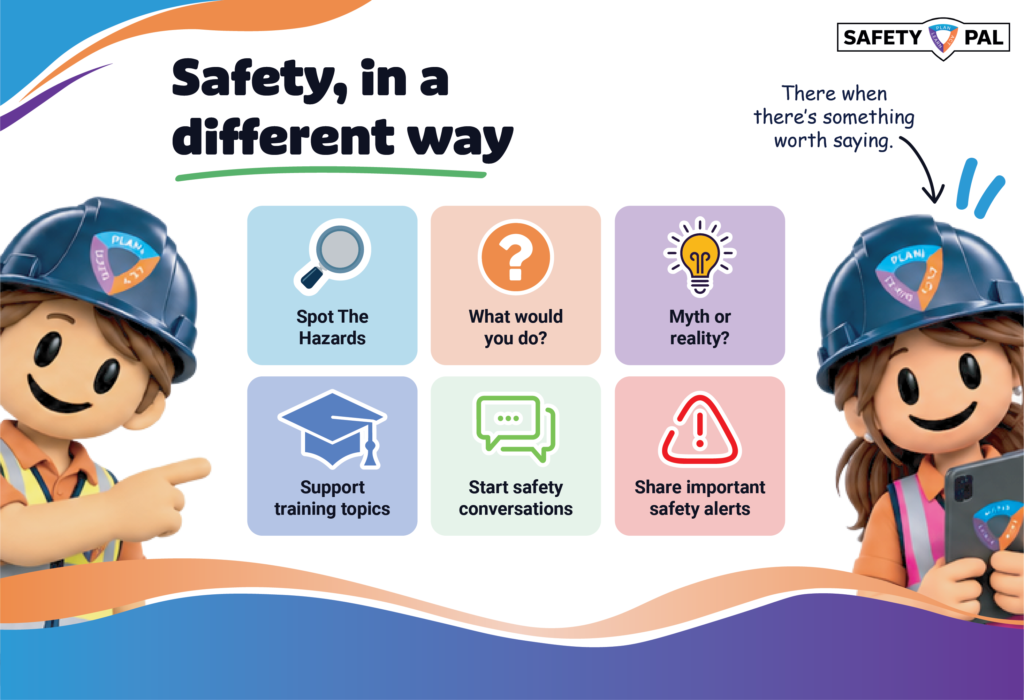
Pal & Ally give important safety messages recognisable faces and personalities. Over time, someone might see Pal and know a practical safety point is coming, or see Ally with her tablet and know she’s about to ask a question, explain something, or encourage them to think again.
That familiarity gives us another way to communicate. Sometimes they might explain a workplace hazard. Sometimes they might ask what you would do in a particular situation. They could support a training topic, share an important safety alert, explain a new Safety PAL feature or simply use a little humour to make somebody stop long enough to think about something important.
The delivery can change. The purpose doesn’t: to help deliver better health and safety.
Choosing two characters rather than one was deliberate, too.
Health and safety doesn’t happen in isolation, and no single person is responsible for making it work. People have different experiences. People have different experiences. They communicate differently, notice different things and ask different questions.
That’s what we want Pal & Ally to represent.
They’re colleagues and equals, but their personalities aren’t identical. Pal is practical, straightforward and keen to get things moving. Ally is organised, inquisitive and likely to ask another question when something doesn’t quite add up.
Pal might notice something first. Other times, it will be Ally. They’ll agree on some things and challenge each other’s thinking on others.
Neither is there to be right all the time. Because good health and safety isn’t about one person having all the answers. It works when people communicate, question, challenge, listen and learn from each other.
PLAN. ACT. LEARN.
Many of you working in health and safety will already be familiar with the HSE’s Plan-Do-Check-Act approach to managing health and safety.
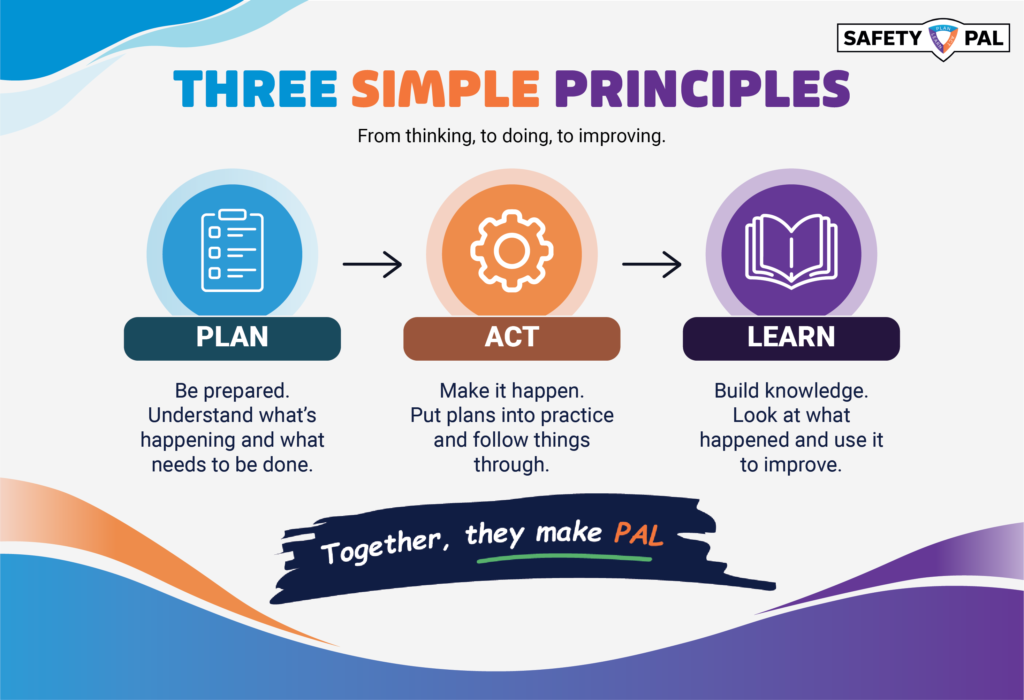
When developing Safety PAL, we took that familiar thinking and created three principles of our own that reflect how we believe good health and safety should work in practice:
🔵 PLAN — Be prepared. Understand what’s happening, identify risks and decide what needs to be done.
🟠 ACT — Make it happen. Put plans into practice, assign actions and follow things through.
🟣 LEARN — Build knowledge. Look at what happened, what worked and what didn’t. Learn from incidents, inspections, audits, training, observations and, importantly, the people actually doing the work.
Together, they make PAL. And Ally? The clue is in her name. Good health and safety needs allies. People who speak up, listen, share information and support each other. People who are prepared to challenge something when it doesn’t look right. Together, Pal & Ally represent both sides of what we’re trying to achieve: Good systems and engaged people.
What Will Pal & Ally Actually Do?
This is where the idea becomes more than simply having two mascots. You’ll see them appearing across Safety PAL in different ways.
They might ask you to spot the hazards in a workplace, present a real-world scenario and ask, “What would you do?”, or challenge a common health and safety myth. You might also see them explain training topics, introduce Safety PAL updates, highlight important alerts, or start conversations about wellbeing and safety culture.
From Seeing It to Acting on It
We know the organisations using Safety PAL operate in professional, highly regulated environments, where the information they communicate can have real consequences.
That’s exactly why how that information is delivered matters.
A safety message can be technically perfect, but if somebody scrolls past it, switches off halfway through it or forgets it five minutes later, it hasn’t achieved what it needed to.
Pal & Ally give us another way to capture attention, build familiarity, and make important messages more memorable.
They let us use personality, expression, conversation, and even humour where appropriate, while keeping the safety message itself clear and meaningful.
Because ultimately, the aim isn’t simply to send more health and safety information. It’s to help people notice it, understand it, remember it and act on it.
Two New Faces. The Same Purpose.
For more than a decade, we’ve been developing Safety PAL around the idea that health and safety should be easier to manage and easier for people to engage with.
- Technology helps us connect the information.
- Systems help organisations manage it.
- But ultimately, people make safety happen.
Pal & Ally are another step in how we communicate with those people. Two recognisable faces that can help us explain, question, remind, teach and occasionally make somebody stop and think.
Because if a different way of communicating helps one more person notice a hazard, remember something from their training, ask a question or speak up when something doesn’t feel right, then it’s doing something worthwhile.
That’s what Pal & Ally are here to help us do.
Deliver better health and safety.
Welcome to Safety PAL, Pal & Ally. 👋


Don't take our word for it,
we'll show you how...
Keeps Employees Safe
By providing training, managing and feedback systems that can be evidenced in 27 languages.
Reduces Risk of Accidents
Provides proof, to reduce your exposure to prosecution.
Provides Real-Time Reporting 24/7
Showing what has been completed, and what important tasks need to be done next.