


Why Businesses Using Safety PAL Do Not Treat Workplace Wellbeing as an Afterthought
Mental Health Awareness Week is an important reminder that health and safety do not stop at physical hazards.
Stress, anxiety, burnout, pressure, fatigue, isolation, and poor well-being continue to affect workplaces across every industry in the UK. While conversations around mental health have improved significantly in recent years, many organisations are still struggling with the practical side of managing wellbeing day to day. The challenge for many organisations is turning wellbeing conversations into something practical, visible, and consistent across everyday operations. To address this gap, the following sections outline specific tools and practical steps designed to help managers and organisations take tangible action, improve visibility, and create supportive environments for their teams.
For many workers, pressure has quietly become normalised. Deadlines rise, responsibilities overlap, and teams absorb more pressure while striving to maintain productivity.
And often, the warning signs are missed until someone reaches the breaking point. This underscores the importance of early detection and consistent well-being checks.
Mental Health in the UK — The Current Picture
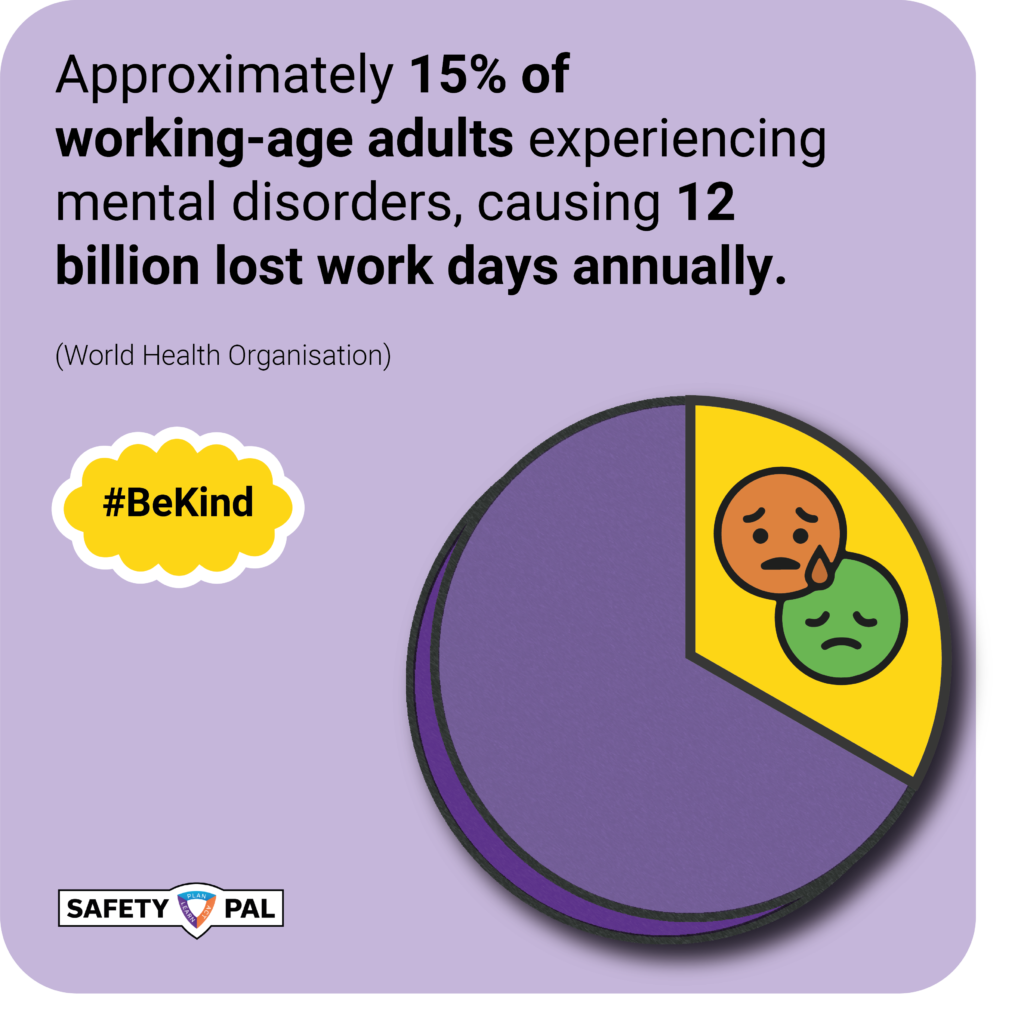
To illustrate the current landscape, recent UK figures continue to show the scale of work-related mental health challenges:
- The HSE reports that approximately 1.9 million workers suffered from work-related ill health in the latest reporting period.
- Around 964,000 workers experienced work-related stress, depression, or anxiety.
- Stress, depression, and anxiety now account for over half of all work-related ill health cases in the UK.
- An estimated 40.1 million working days were lost due to work-related ill health and workplace injury.
- Mind reports that 1 in 4 people in England experience a mental health problem each year.
Looking beyond the numbers, behind every statistic is a person trying to balance workload, responsibilities, personal life, and well-being. For many organisations, the challenge is not care or intent; rather, it lies in achieving visibility around these individual struggles.
What Organisations Are Being Told
Building on this understanding, organisations such as Mind, Rethink Mental Illness, and the HSE consistently emphasise similar themes:
Early conversations matter
People are far more likely to speak openly when environments feel supportive rather than reactive.
Visibility matters
Managers cannot support what they cannot see.
Well-being should not only be discussed after problems arise.
A proactive approach creates healthier and more sustainable workplaces.
Culture influences behaviour
How people communicate, raise concerns, ask for help, and support one another directly impacts well-being.
Pressure builds quietly
Mental health challenges are not always obvious. In many workplaces, people continue performing while struggling privately. This is why mental health awareness cannot be reduced to a one-week poster campaign. Instead, it needs to become part of everyday operational thinking—seamlessly woven into ongoing practices and routines.
What Safety PAL Is So Popular
The team at Safety PAL strongly believes that health, safety, and well-being should work together — not exist as separate conversations.
Recognising these factors and, through collaboration with the organisations mentioned and many clients, Safety PAL (Plan Act Learn) supports the development of further practical tools to help organisations improve visibility, strengthen communication, reduce operational pressure, and support workforce wellbeing in real working environments. These tools include mood monitors, fatigue trackers, and centralised reporting features, each aimed at addressing different aspects of workplace wellbeing.
Wellbeing Mood Monitor
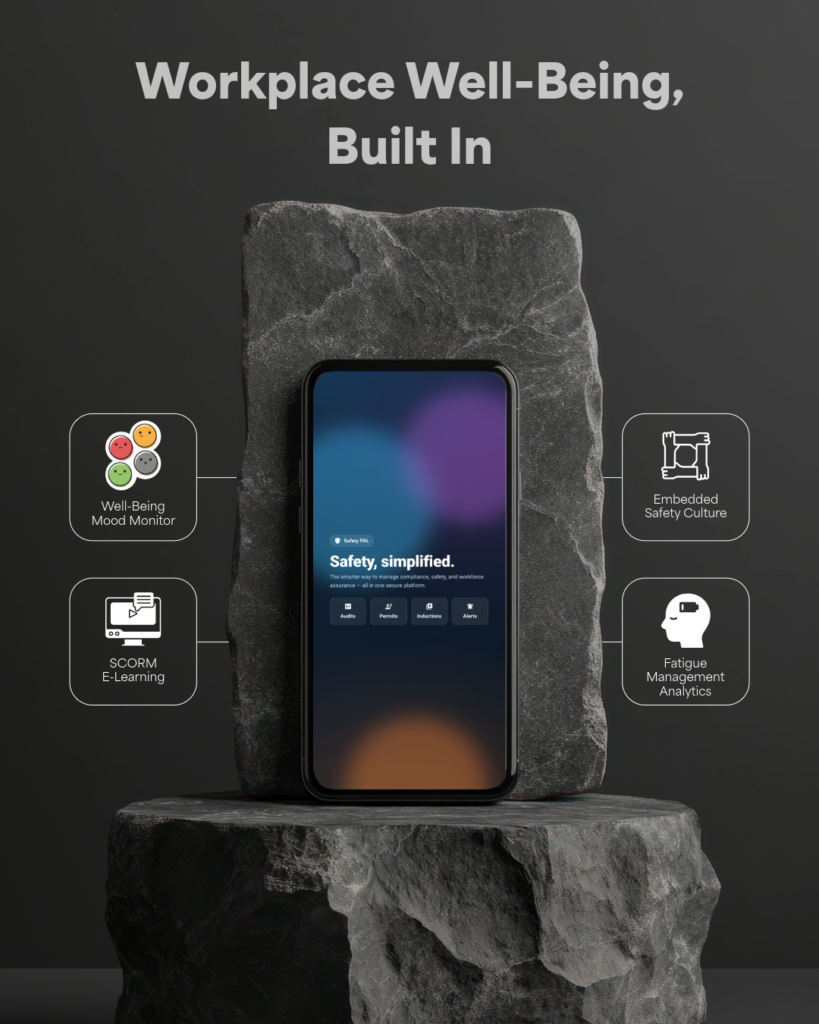
Our unique Wellbeing Mood Monitor provides all our clients with clearer visibility into workforce wellbeing trends over time. These trends give organisations mental first aiders and a wide variety of managers essential information for further communications with workers and individuals.
For example, one logistics company adopted the tool and identified a rising trend of low mood scores linked to shift changes. By addressing the issue early, their team identified pressure points, enabling improved communication. Considered small changes from management, revealed meaningful improvements across all departments.
Managers use the system to proactively spot patterns, check in with teams, and understand daily well-being—moving beyond assumptions or waiting for issues to escalate.
This supports:
- Earlier intervention.
- Better communication.
- Increased management visibility.
- Improved well-being awareness.
- Stronger workforce engagement.
Because often, the hardest part of wellbeing management is recognising when someone may be struggling, tools that facilitate early detection make a tangible difference.
Fatigue Management
Fatigue remains one of the most underestimated workplace risks across many industries.
Long hours, disrupted sleep, high workloads, stress, physical demands, and mental pressure can all affect concentration, decision-making, reaction times, and overall well-being.
Safety PAL’s Fatigue Management tools let organisations monitor and address fatigue-related risks by improving visibility of workloads, working patterns, and wellbeing, supporting sectors such as logistics, farming, and aviation, where hidden pressure is common.
Fatigue often develops subtly, yet can impact well-being, safety, communication, and operational performance if left unaddressed.
Safety Culture Embedded Throughout The System
A strong safety culture grows from clear communication, consistency, accountability, and people feeling empowered to speak up.
Safety PAL has been designed to support this through:
- Centralised communication.
- Live visibility across teams and tasks.
- Action tracking and accountability.
- Training visibility and refresher tracking.
- Easier reporting and engagement.
- Connected operational oversight.
The aim is simple: reduce friction, reduce confusion, and reduce unnecessary pressure—making operational wellbeing an everyday priority.
Disconnected systems and fragmented communication not only affect compliance — they affect people.
Training, Awareness & Free Wellbeing Resources
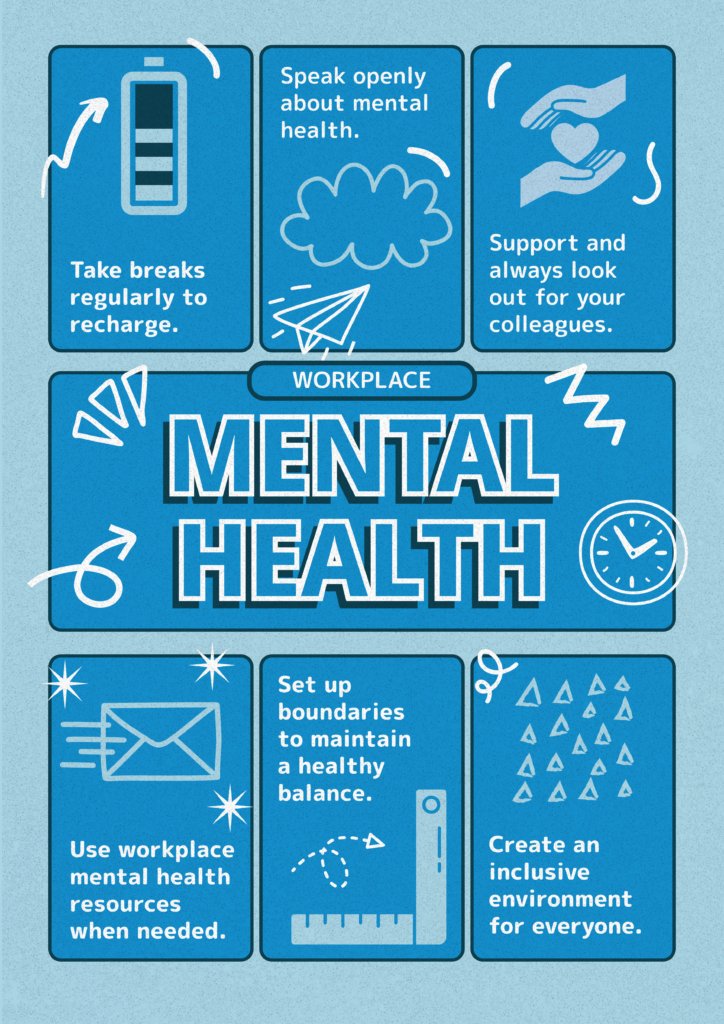
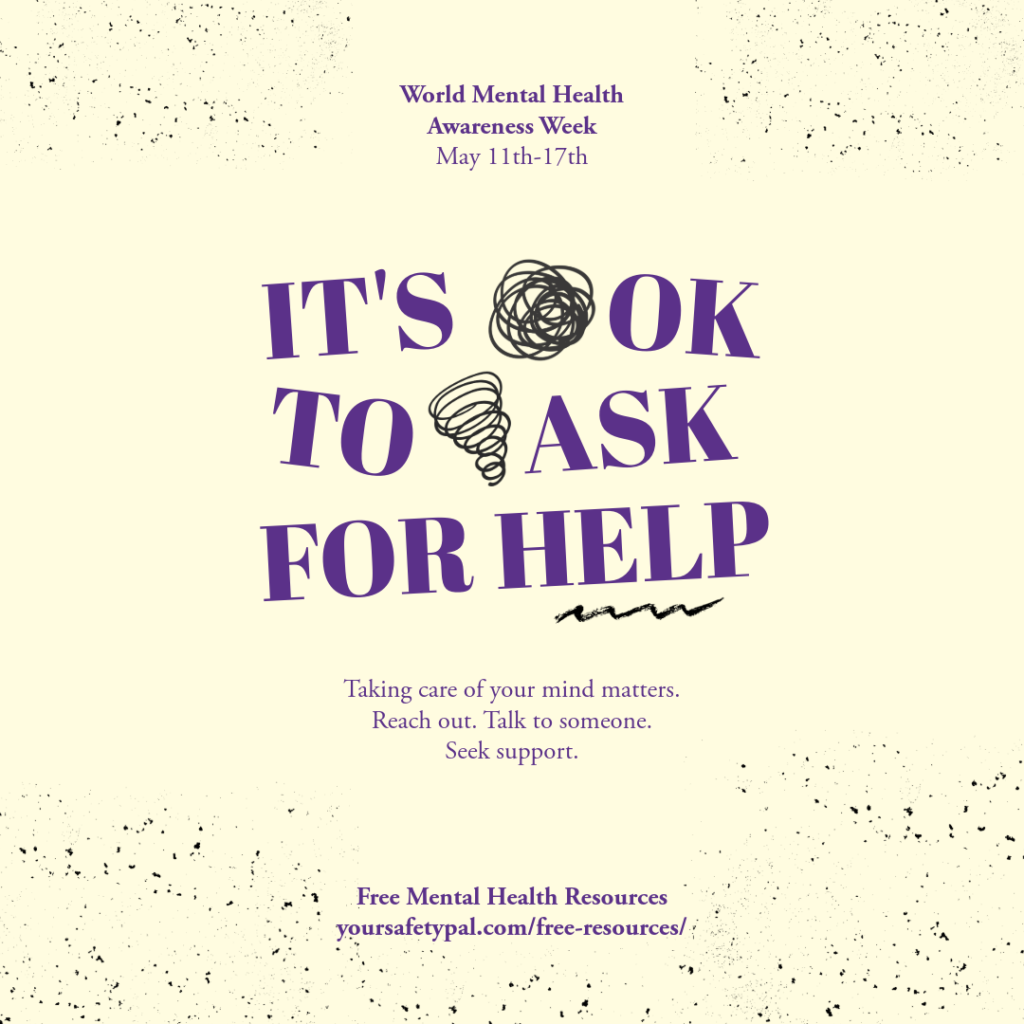
In addition to our platform, Safety PAL offers a growing library of free resources—wellbeing posters, awareness materials, presentations, toolbox talks, and practical guidance—that organisations can share instantly with their teams. Leaders can access and distribute these materials at any time via the Safety PAL E-Learning section, making it easy to promote awareness and deliver training across the workforce.
Consultants working across multiple sectors also benefit. They can use Safety PAL’s ready-made resources in client training, workshops, and wellbeing audits, providing immediate, evidence-based support with real impact—at no extra cost.
We also offer SCORM-compatible training modules and presentation refreshers. These can be tracked for completions and engagement within Safety PAL or integrated into your existing HR or LMS systems, ensuring seamless deployment and visibility into compliance for your organisation.
Because awareness is far more effective when information is simple, accessible, and easy to engage with.
Mental Health Awareness Is About More Than One Week
Mental Health Awareness Week is an opportunity to reflect on something many workplaces are experiencing every day:
- Pressure.
- Workload.
- Responsibility.
- Fatigue.
- Uncertainty.
Most organisations care deeply about their people.
The ongoing challenge is creating systems, communication, and cultures that continue to support well-being as operational pressure increases. Because ultimately, healthier teams are safer teams. And safer teams build stronger businesses.
Sometimes people do not need another policy.
They need open communication, active support, and confidence that someone is aware of their needs before issues grow overwhelming.
A Message from the Team
At Safety PAL, we firmly believe that when people are genuinely supported, safer and more resilient workplaces naturally emerge.
Putting people first is not just a philosophy—it’s embedded in everything we do, from leadership to daily operations. A culture of safety and wellbeing must be driven from the top, embraced at every level, and empowered from the ground up.
Thank you for taking the time to read this article. We hope it has offered practical insights and inspired your vision for building a stronger, safer, healthier, and more engaged workplace.
Keep looking after yourself and those around you—wellbeing is a shared responsibility.
If you’re curious about how Safety PAL can support your organisation, or if you have questions about our approach, we genuinely welcome your interest. Reach out to us—we’re here to help.
Thank you, and continue staying safe.
— Rhea Spencer, Mental Health & First Aid Advisor at Safety PAL
Support
Mind
Website: https://www.mind.org.uk
Phone: 0300 123 3393
Email: info@mind.org.uk
Rethink Mental Illness
Website: https://www.rethink.org
Phone: 0808 801 0525
Email: info@rethink.org
Mates in Mind
Website: https://www.matesinmind.org
Phone: 020 3510 5018
Email: info@matesinmind.org
Samaritans
Website: https://www.samaritans.org
Phone: 116 123
Email: jo@samaritans.org
Mental Health Foundation
Website: https://www.mentalhealth.org.uk
Phone: 020 7803 1100
Email: info@mentalhealth.org.uk
Useful UK source links:
- HSE Work-Related Ill Health Statistics
- HSE Key Figures 2024/25
- HSE Working Days Lost Statistics
- Mind Mental Health Facts and Statistics
- Safety PAL Fatigue Management
- Safety PAL Mood Monitor
- Safety PAL Health & Safety Culture
- Safety PAL Occupational Health Assessment
- Safety PAL CPD Records
Don't take our word for it,
we'll show you how...
Keeps Employees Safe
By providing training, managing and feedback systems that can be evidenced in 27 languages.
Reduces Risk of Accidents
Provides proof, to reduce your exposure to prosecution.
Provides Real-Time Reporting 24/7
Showing what has been completed, and what important tasks need to be done next.