


LinkedIn is becoming a common choice for many regulatory bodies to share vital information and statistics. In August 2025, Chris Steel, an HSE Specialist Inspector (Noise and vibration) at the Health and Safety Executive (HSE), began a series of posts regarding the impact of companies not fully complying with their legal obligations regarding noise in the workplace.
These posts included first-hand situations, photos and shocking statistics that many directors (responsible persons) will not be aware of. When they become aware via an HSE visit of a legal or civil breach (injury claim), they will wish for information like the below, allowing them to prevent injury better and protect their business.
The Latest HSE Statistics on Workplace Noise
Chris Steel’s initial noise level posts opened with 1 in 4. That’s 1 in 4 of all inspected workplaces visited during 2024-2025, with noise levels above the upper exposure action value (LEP,d 85dB).
This value, known as LEP,d 85dB, represents a daily noise exposure level that, if surpassed, mandates specific actions from employers. When a person’s daily noise exposure reaches or exceeds this level, the employer is legally required to take measures to reduce the noise exposure.
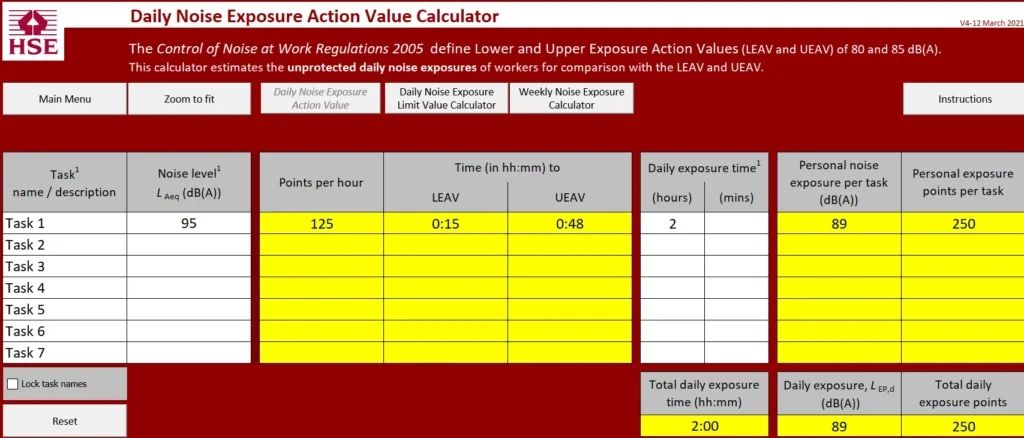
We urge you to check if you have a noise problem. This is initially a simple task, and the HSE provides you with a free noise calculator to help you take noise measurements.
The HSE guideline assesses the risks, decides whether any further action is needed, and plans how to take it. It is more than just measuring noise—sometimes measurements may be unnecessary.
The results/data from your initial review/survey will be the risk assessment, which should help you decide how to ensure the health and safety of your employees exposed to noise.
We will return to helpful tools later in this blog, but before we do, let us highlight more about the statistics surrounding noise in the workplace.
Understanding the 85 dB Legal Action Value (LEP,d)
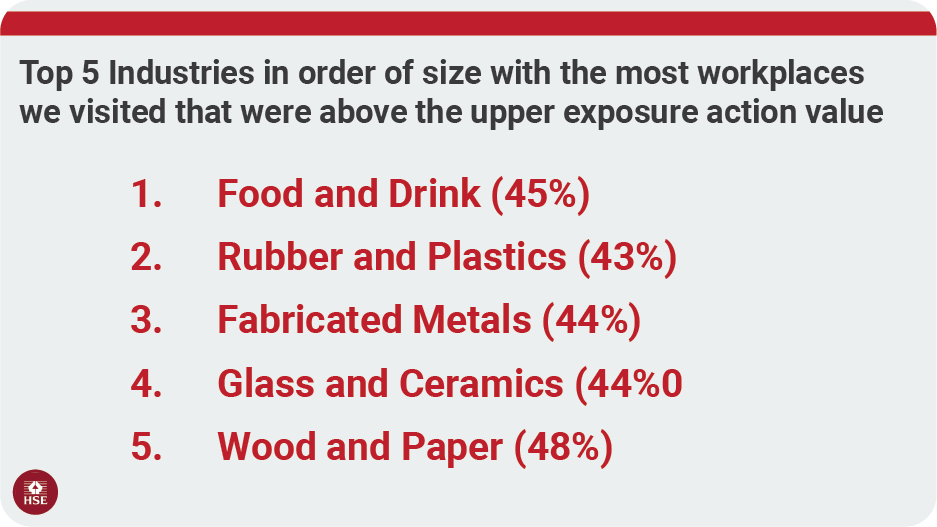
The HSE statistics indicated that noise levels exceeded the upper exposure action value of 85 decibels (dB) in 1 in 4 of the workplaces visited by HSE inspectors. This value, known as LEP,d 85dB, represents a daily noise exposure level that mandates specific actions from employers if surpassed. When a person’s daily noise exposure reaches or exceeds this level, the employer is legally required to take measures to reduce the noise exposure.
Of all the duty holders the HSE visited in 2024-2025, around one-third received enforcement action against them for noise (NoC/IN, etc.). Chris had his detective hat on and found that, in a typical three-month period before the noise intervention, compared to three months during the noise intervention, the volume of enforcement on this topic had tripled. However, he states that he would caveat that because the inspections during the noise intervention tried to target sites where noise was likely to be an issue.
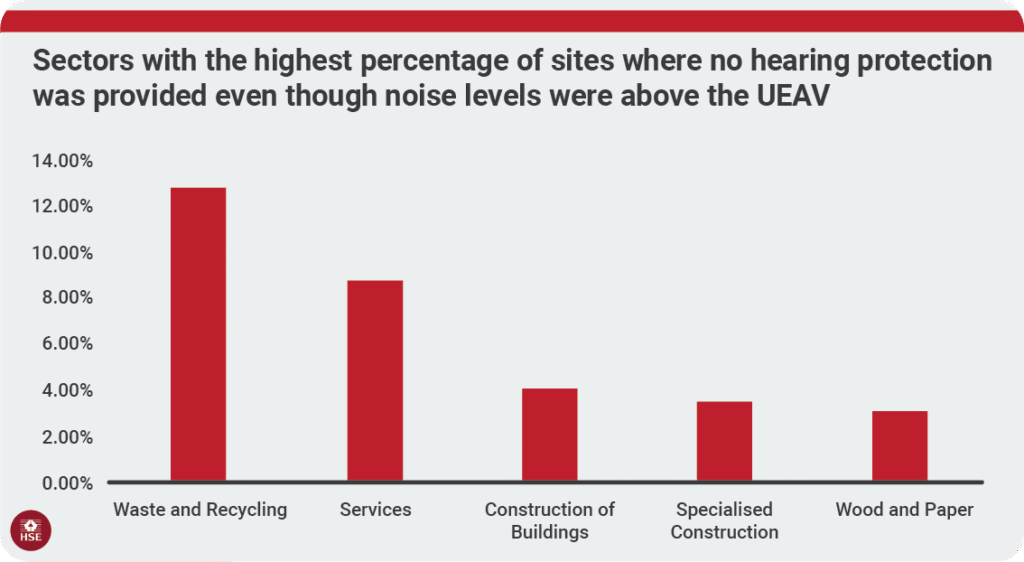
This is only from the sites that the HSE visited. They found that the term “service” is a bit of a catch-all term, as the HSE found that some companies you may not think of as being in the service industry had identified themselves as part of it.
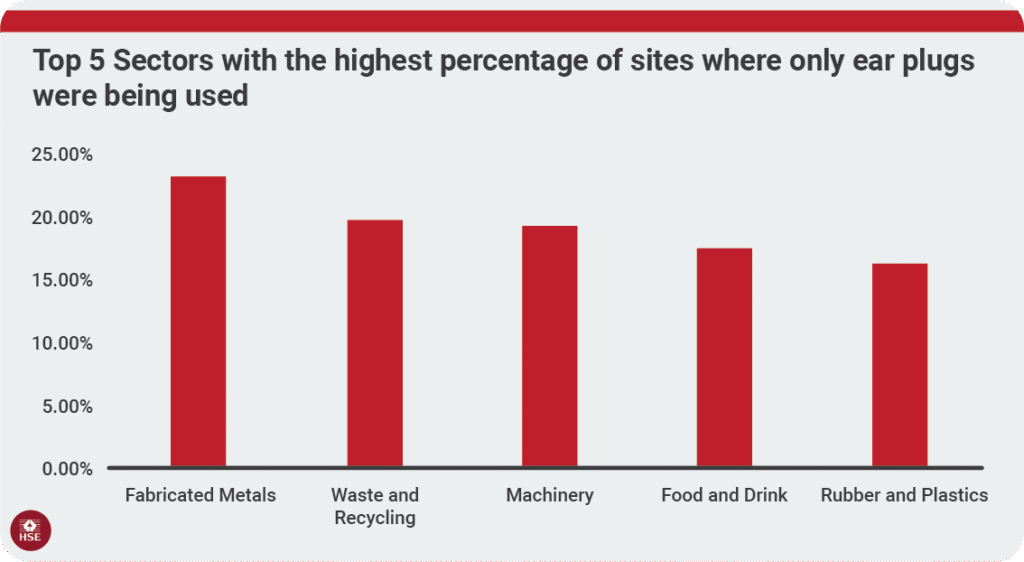
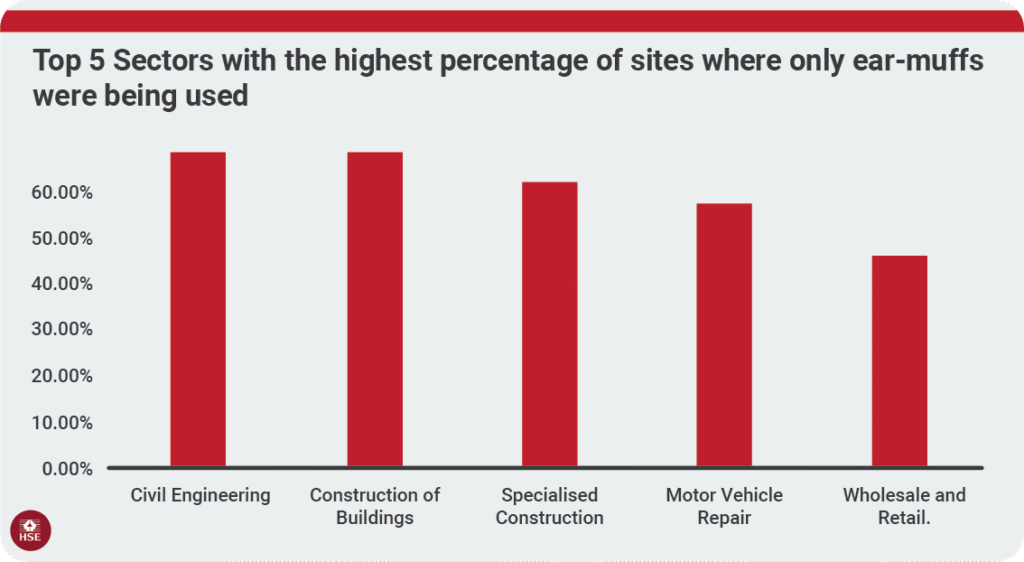
Some employees are consulted on the type of hearing protection in use. It is unlikely that everyone is happy with earplugs. The image below shows the percentage of sites the HSE visited in 2024-2025, not the percentage of all sites in these industries.
Hearing Protection in the Workplace: Earplugs vs Earmuffs
There’s a vast difference between employees who wear earplugs and those who wear earmuffs. Chris Steel made an interesting point that this is because it is simple to attach earmuffs to a hard hat, and if you are having your check, the BSIF campaign, just because it fits, doesn’t mean it fits. The image shows the percentage of sites visited by the HSE in 2024-2025, not that of all sites in Britain.
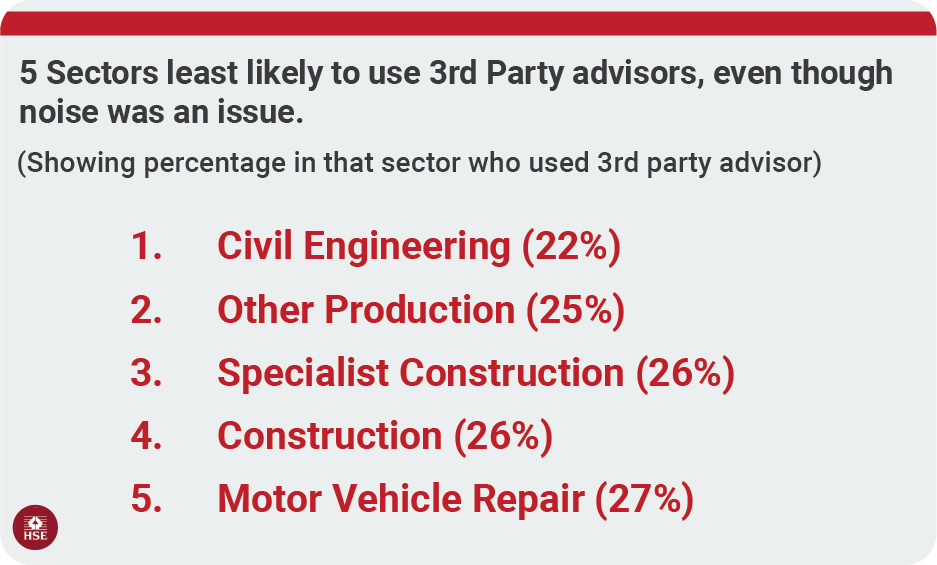
When the HSE visited sites, they found that around 3 out of 4 companies didn’t get advice on how their noise might make their workers ill. Chris asks employees in the construction sector:
- ‘Do you get advice on noise impact from the environment for your planning application?
- ‘Do you get advice on the sound insulation within your new building?’
- ‘Do you get advice on ensuring your construction noise does not annoy the neighbours?’
When the HSE visited sites, they found that around 3 out of 4 companies didn’t get advice on how their noise might make their workers ill. Chris asks employees of the construction sector: Do you get advice on noise impact from the environment for your planning application? Do you get advice on the sound insulation within your new building? Do you get advice on ensuring your construction noise does not annoy the neighbours?
Summary of Key Noise Statistics
- 1 in 4 of the workplaces visited by HSE inspectors exceeded the action value of 85 decibels (dB)
- 1 in 3 of all the duty holders the HSE visited in 2024-2025 were sanctioned for failing to provide suitable and sufficient noise control.
- 3 out of 4 companies visited didn’t get advice on how their noise might make their workers ill.
Employer Legal Responsibilities for Noise Control
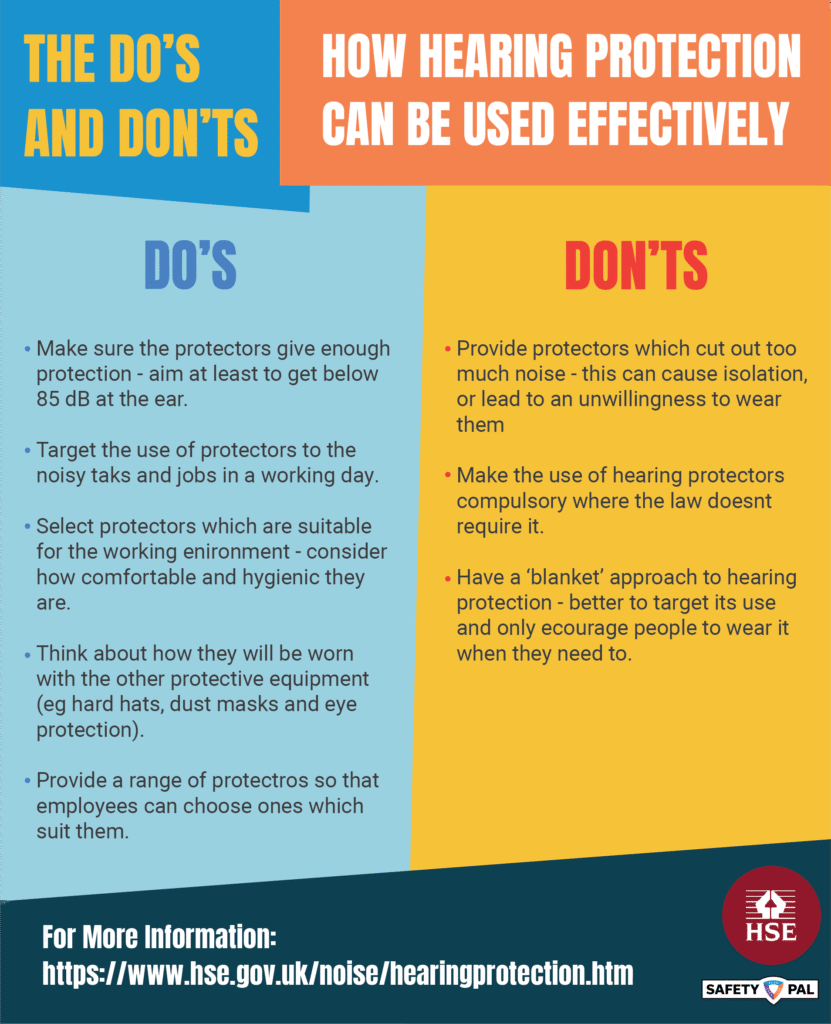
Hearing protection should be issued to employees when:
- Extra protection is needed above what has been achieved using noise control.
- As a short-term measure, other methods of controlling noise are being developed.
You should not use hearing protection as an alternative to controlling noise by technical and organisational means.
What the law requires from employers:
- Provide your employees with hearing protectors if they ask for them and their noise exposure is between the lower and upper exposure action values.
- Provide your employees with hearing protectors and use them properly when their noise exposure exceeds the upper exposure action values.
- Identify hearing protection zones, ie, areas where hearing protection is compulsory, and mark them with signs.
- Provide your employees with training and information on using and caring for the hearing protectors.
- Ensure that the hearing protectors are properly used and maintained.
Choosing the Right Hearing Protection
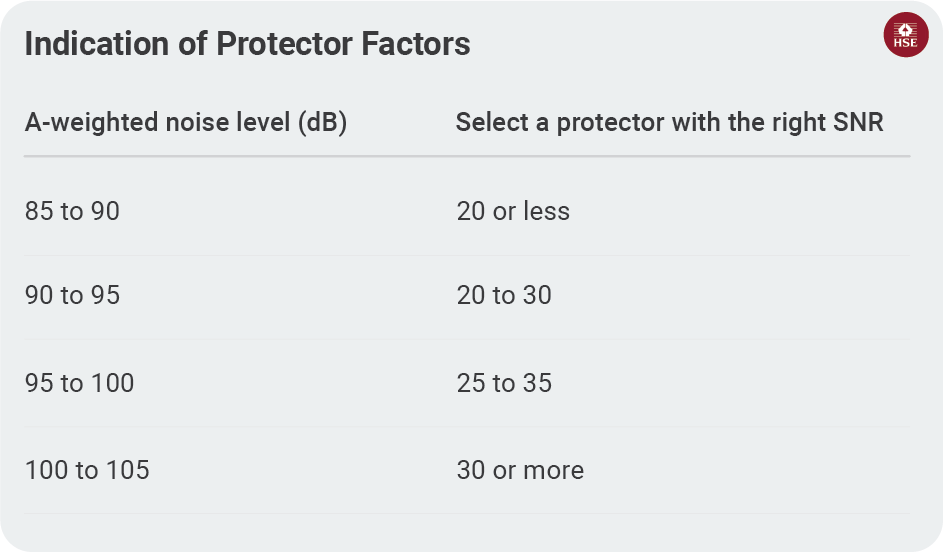
Protectors that reduce the level at the ear to below 70 dB should be avoided since this overprotection may make communication and hearing warning signals difficult. The table below indicates the protective factor suitable for different noise levels (the level during a particular work task, not the daily personal noise exposure). It is based on a hearing protection device’s single number rating (SNR) value. To avoid overprotection, you should use hearing protection with SNR values at the lower end of those shown in the table below when the noise is at the lower end of the corresponding range of levels.
Everyday Example: Noise Levels and Hearing Loss
Imagine a bright, sunny day as you ride your lawnmower, effortlessly gliding over the lush green grass. The fresh scent of cut grass fills the air, but soon the roar of the blades becomes overwhelming, drowning out the peaceful sounds of nature.
You put on your headphones and crank up the volume to escape the noise, which risks damaging your hearing. The solution is to wear earmuffs over your headphones. This way, you can lower the music volume while still enjoying your favourite tunes, protect your hearing, and appreciate the beauty around you. You can apply this at work if the noise is especially loud by putting in earplugs and then earmuffs over the top.
Note that once decibels reach over 83, the danger increases. Every 3 dB increase in sound intensity effectively doubles the sound energy reaching the ear, says the Trades Union Congress. This doubling of sound energy also means the time you can safely be exposed to that noise is halved. If 80 dB is safe for 8 hours, 83 dB (3 dB higher) is only safe for 4 hours, and 86 dB (another 3 dB higher) is only safe for 2 hours.
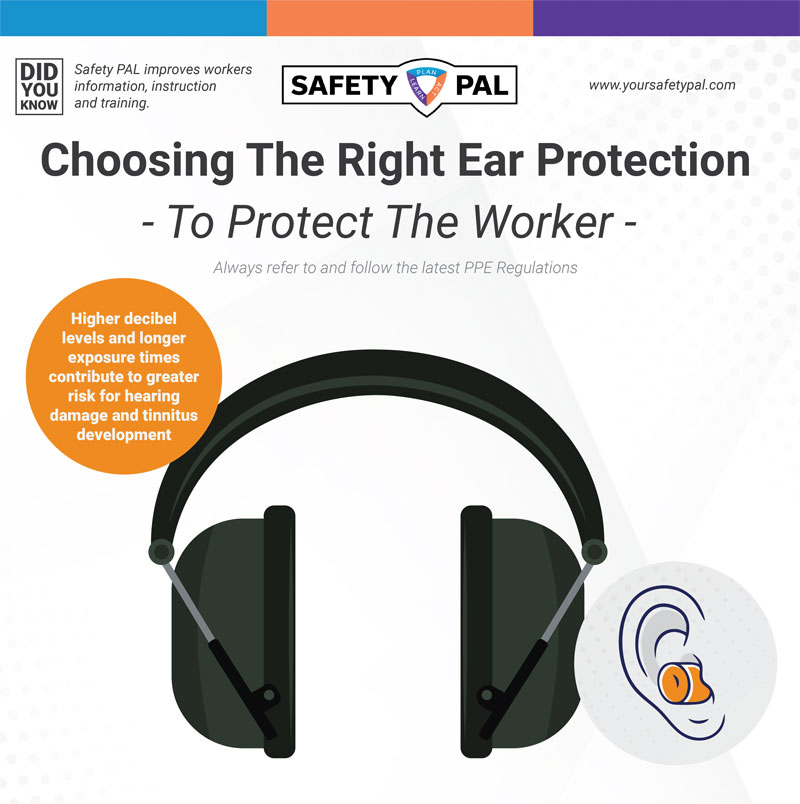
Free Hearing Protection Poster
Download this free printable workplace poster and other free resources here…
Safety PAL Solutions for Workplace Noise
Don’t fret if you have read the above and feel overwhelmed. Solutions are available, and many are very easy and effective.
As Chris Steel explains in many posts, the HSE provides multiple guidance documents and other vital information to support your transition to a more compliant business.
Safety PAL tools support the HSE guidance and help you and your business achieve more robust compliance. They are developed based on legal requirements and designed around the HSE: HSG, INDGs, and ACOPS.

Noise & Site Assessments with Safety PAL
You can use Safety PAL to complete and record a site inspection, including results and images from your environmental noise meter. These values can be used to populate the free HSE noise calculator. Armed with an accurate noise assessment, you can add it through the Safety PAL job build process, ensuring all workers have access to, read, and understood it. You can also store the assessment in your company repository. Furthermore, you can add noise level (dB) to the equipment under the Safety PAL plant and equipment module.
Finally, Safety PAL PPE assessment and HPE modules ensure that the workers have the correct hearing protection and fully understand how to use and maintain it. Management can track the use of PPE, HPE, and RPE.
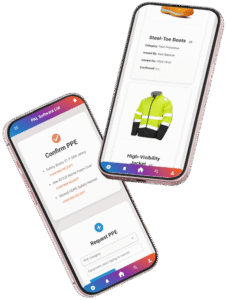
PPE Assessments and Compliance Tracking
Effective management of Personal Protective Equipment (PPE) is critical for maintaining workplace safety and compliance with health and safety legislation. The Safety PAL PPE assessment tool does:
- Utilise our bespoke tools to conduct thorough PPE assessments, ensuring your workforce has the appropriate gear tailored to their job roles and risks.
- Efficiently issue and track PPE to employees with digital records that update in real time, preventing shortages and excess inventory.
- Leverage the power of an award-winning safety management platform that centralises all your PPE needs and other health and safety processes.
- Automatically update employee Continuous Professional Development (CPD) profiles with PPE training and compliance data, enhancing professional growth and safety compliance.
Best Noise Meter Apps for Workplace Monitoring
You can download an app on your phone that allows you to walk around your site, standing 1 meter away from anything that makes noise.
Using the HSE Noise Calculator
We urge you to check if you have a noise problem. Initially, this task is simple, and the HSE provides a free noise calculator to help you take noise measurements. HPE – hearing protection equipment
Don't take our word for it,
we'll show you how...
Keeps Employees Safe
By providing training, managing and feedback systems that can be evidenced in 27 languages.
Reduces Risk of Accidents
Provides proof, to reduce your exposure to prosecution.
Provides Real-Time Reporting 24/7
Showing what has been completed, and what important tasks need to be done next.