


Assessing worker competencies is a cornerstone of any robust workplace safety strategy. Beyond ensuring tasks are completed correctly, competence assessments validate the workers’ knowledge, information, instruction and training.
Plus, when undertaken correctly, they safeguard employers against legal or civil claims. Incorporating tools like Safety PAL Health & Safety Software can streamline the process, making competency assessment not only easier to manage but also central to your health and safety best practices.
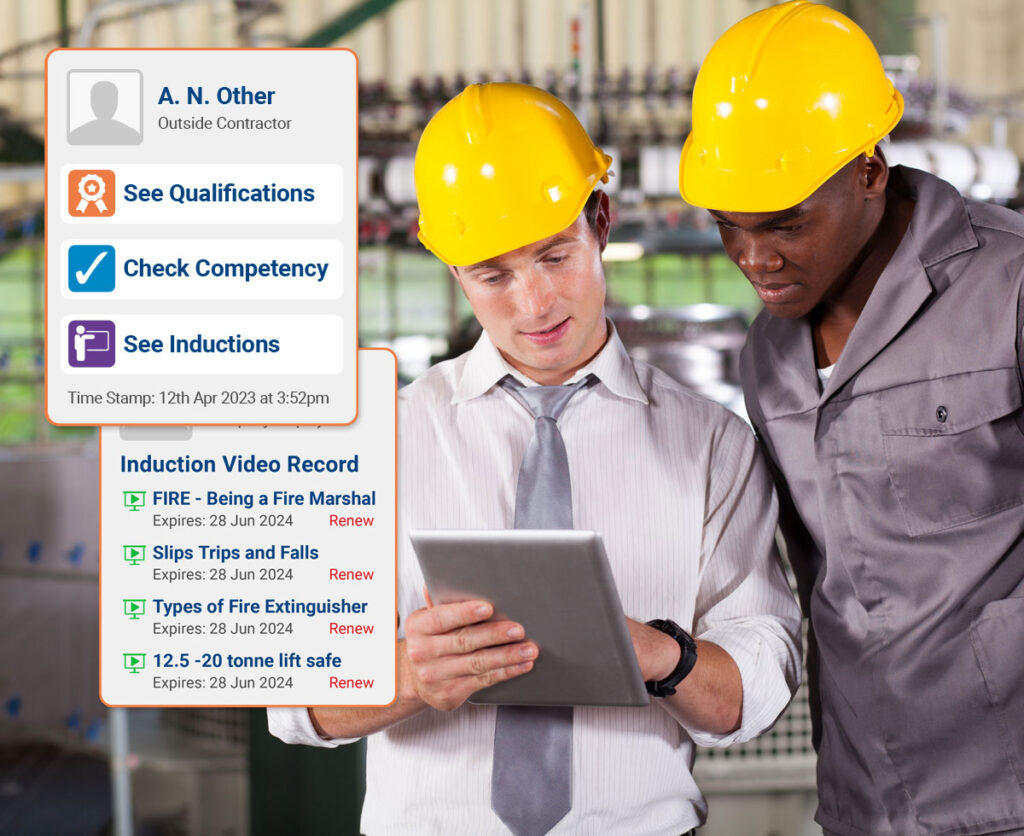
What is Competency Assessment?
A competency assessment evaluates an employee’s skills, certifications, and qualifications in relation to workplace risks and control measures. It’s more than confirming a task can be completed—it’s about ensuring the worker has sufficient knowledge, training, and experience to perform safely.
For example, if a machine operator uses equipment with Safe Systems of Work guidelines, the competency assessment will:
- Allow the assessor to review how the worker completes the task, including fault reporting and emergency protocols, and how they understand the information provided and the environment.
- Validate the worker’s understanding of risk assessments, method statements, and operational manuals.
- Identify gaps in knowledge requiring further training or supervision.
This iterative process doesn’t end once initial competence is completed – It needs to be continued with routine reviews, assessments and updating knowledge, information and training to combat skills decay.
To be fully compliant, you need to track and collect evidence, at each stage, that the process has been completed satisfactorily and understood.
Why Are Competency Assessments Critical?
Competency sits at the heart of occupational safety regulations and ensures tasks are carried out without undue risk. The UK’s Health and Safety Executive (HSE) defines competence as:
“…the combination of training, skills, experience and knowledge that a person has and their ability to apply them to perform a task safely. Other factors, such as attitude and physical ability, can also affect someone’s competence.”
Regulation 13 of The Management of Health and Safety at Work Regulations 1999 directly addresses the importance of competency assessments. Specifically, Regulation 13(1) states:
“Every employer shall, in entrusting tasks to his employees, take into account their capabilities as regards health and safety.”
This regulation legally mandates that employers must consider an employee’s capabilities, particularly concerning health and safety, before assigning them tasks.
This directly implies the need for some form of assessment to determine if an employee is competent to perform a task safely and effectively.
Failing to manage and collect evidence of competency can lead to:
- Civil or legal claims. For instance, proving an injured worker had “suitable” training often hinges on clear and accessible competency documentation and training evidence.
- Losing contracts with clients – companies need proof their workforce meets robust competency standards before approving bids or awarding supply-chain roles.
- HSE compliance breaches. Inspectors require detailed evidence that workers are competent under regulations like the Health and Safety at Work Act 1974 and The Management of Health and Safety at Work Regulations 1999.
While workplace injuries are unpredictable, understanding your rights and employer responsibilities is crucial, therefore effective competency management not only protects lives but also reduces legal liability, maintains client relationships, and ensures you can prove regulatory compliance.
How to Assess Worker Competency: A 7-Step Plan
Risk management is a step-by-step process for controlling health and safety risks caused by hazards in the workplace. To ensure competency while mitigating potential hazards, follow this practical plan:
1. Understand Hazards and Controls
Begin with a comprehensive hazard identification process that examines all potential sources of workplace injury or illness. This assessment should evaluate both the likelihood and severity of potential harm, leading to targeted control measures that either eliminate risks entirely or implement robust risk management strategies.
Consider these key areas when conducting your assessment:
- Historical Data: Review past incidents, near-misses, and health records to uncover patterns and less obvious hazards
- Non-Standard Operations: Account for maintenance activities, cleaning procedures, and variable work cycles that may introduce additional risks
- Health-Specific Concerns: Address ergonomic factors, chemical exposure, psychological well-being, and other health-related hazards
- Stakeholder Impact: Consider how identified hazards might affect various groups, including:
- Employees performing regular duties
- Contractors working on-site
- Visitors to your facilities
- Members of the public in proximity to operations
Using Safety PAL’s integrated risk assessment tools, you can systematically document these findings, ensuring all identified risks are addressed through appropriate training and assessment protocols.
Remember: A thorough initial assessment forms the foundation for effective competency evaluation and ongoing safety management.
Hazards/Mistakes to Avoid:
- Failing to involve the workers performing the tasks during the hazard review—this can cause gaps in understanding real risks.
- Overlooking less obvious hazards, like ergonomic risks or hazards from routine maintenance tasks.
- If you employ 5 or more people, you must record your significant findings, including:
- The hazards (things that may cause harm).
- Who might be harmed and how.
- What you are doing to control the risks.
2. Discuss and Align with RAMS (Risk Assessment & Method Statements)
Make sure to include your workers at this stage. Engage your staff and operators in the promotion and achievement of safe and healthy conditions.

Use calibrated questions to engage workers. For instance, ask open-ended questions such as, “What do you do if equipment ‘X’ malfunctions?” Review Risk Assessments and Method Statements (RAMS) together to ensure workers understand both what is required and why. Work with the workers to improve the Risk Assessments into accurate and workable documents. Agree on how safe work should be carried out.
Confirm that workers are not just reading materials but are interpreting and understanding the information and communicating ‘upwards’ effectively. Test them with “what-if” scenarios related to emergencies or failures to ensure comprehension. Safety PAL has tools to manage this and capture results.
Hazards/Mistakes to Avoid:
- Assuming agreement or nodding equates to understanding.
- Overloading workers with complex or excessive documentation without explanation, leading to confusion.
ENJOYING THIS ARTICLE? STAY SAFE AND INFORMED
Subscribe to our email newsletter to receive timely updates, helpful safety alerts, and the latest insights directly to your inbox...
3. Validate Understanding
Have the worker perform the task under observation, either with a trainer or supervisor present. Use role-playing for emergency situations where live demonstration isn’t possible. Record evidence, such as photos or short videos, of the worker performing the task correctly. These can be captured and stored within Safety PAL.
Pay attention to signs of hesitancy or uncertainty during the task—it could indicate gaps in understanding or confidence. Provide immediate feedback and give the worker opportunities to correct mistakes. Remember better training and greater understanding lead to a safer environment and a more engaged workforce.
Hazards/Mistakes to Avoid:
- Expecting perfection on the first attempt—competency may require multiple sessions to reinforce the correct methods.
- Failing to validate knowledge, information, instruction & training could cause scenarios that disrupt routine operations, such as power failures or equipment malfunctions.
4. Monitor and Review Competence Over Time
Schedule follow-up assessments periodically, especially after significant time has elapsed since initial training. These can include a mix of refresher courses, shadowing, and feedback sessions. Monitor not just worker performance but also any environmental changes that might impact safety. Use Safety PAL software to schedule, manage and record evidence of reviews.
Establish clear benchmarks for what continuing competence looks like and document evaluations. Regular reviews help identify “skills decay” and prevent overconfidence, which can lead to unsafe shortcuts.
Hazards/Mistakes to Avoid:
- Failing to address complacency that can develop over time. Workers who become too comfortable may inadvertently skip steps.
- Not adapting reviews to changing environments or evolving procedures. For instance, new equipment or hazards might necessitate updated protocols.
5. Reinforce Training to Prevent Skills Decay
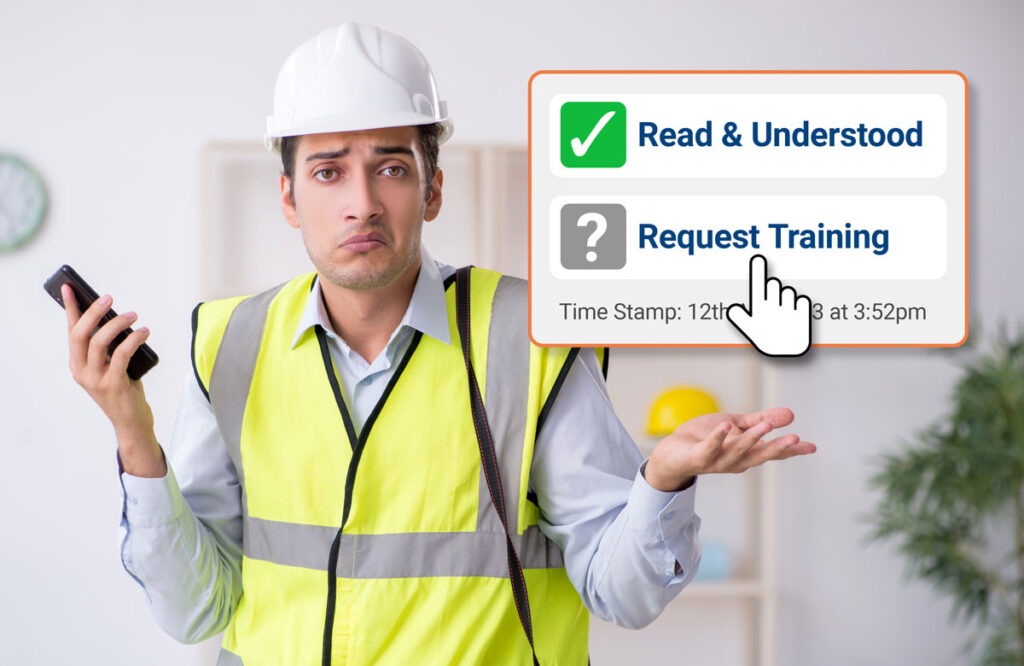
Use multiple forms of reinforcement, such as safety alerts, bulletins, or interactive training videos that can be reviewed on demand. Provide micro-training on specific scenarios or operations workers struggle with during assessments.
Implement an easy-to-access e-learning platform (like Safety PAL’s CPD portal) where workers can update and reinforce their skills at their convenience.
Hazards/Mistakes to Avoid:
- Neglecting to diversify and update training mediums—combining verbal, visual, and hands-on training is more effective than sticking to a single format.
- Allowing too much time to elapse between the initial training and refresher sessions, especially in high-risk roles.
6. Engage Team Feedback
Speak with team members who interact with the worker(s) daily. Their observations can provide insights into consistency, teamwork, and safe practices in real-life scenarios. Consider regular team safety meetings where workers share challenges or near-miss experiences.
Use feedback to identify trends, such as recurring concerns among the workforce, which may suggest gaps in systemic training rather than individual competence.
Hazards/Mistakes to Avoid:
- Ignoring negative feedback or dismissing concerns raised by team members, as this can erode trust and fail to address real issues.
- Failing to connect feedback to actionable solutions, such as additional training or procedural changes.
7. Collating and Storing Evidence
Maintain a centralised database to record all aspects of the competency assessment, such as training completion dates, video/photo evidence, feedback, and test results. Organise records so they are readily accessible in case of an audit, accident investigation, or client request. Create templates for documentation to ensure consistency.
Tools like Safety PAL simplify this process by providing a robust system for templating, documenting and tracking competence over time.
Hazards/Mistakes to Avoid:
- Failing to back up records or creating duplicate documentation, leading to inefficiency.
- Gaps in evidence—make sure every interaction is logged, from training to validation and follow-up assessments.
Following these steps builds a system that is both proactive and defensible, addressing legal requirements and promoting workplace safety.
Why Use Safety PAL for Competency Assessments?

Traditional methods of managing health and safety are often disconnected, cumbersome, and prone to documentation gaps. You may be using a paper-based solution or 2-3 online systems that are not connected. This is where Safety PAL’s comprehensive Health & Safety software steps in:
Key Benefits of Safety Pal Safety software:
- HSE Compliance: Safety PAL aligns competency tracking with regulatory requirements like the Health and Safety at Work Act 1974 and HSE guidelines.
- Integrated Evidence Management: Store certifications, records, and worker training evidence all in one easily accessible portal.
- Streamlined CPD: Provide workers with a Continuing Professional Development (CPD) portal that is simple to update and monitor for compliance.
Safety PAL uniquely bridges the gap between competence requirements and technology solutions, giving employers proof their operations are safe and compliant. Book a demo and see in real-time how it can collect, manage and prove workers’ competencies.
For Company Directors
Incorporating Safety PAL into leadership strategies reduces risks, enhances workplace morale, and reinforces a commitment to safety. Being legally accountable for health and safety mismanagement, directors can protect their organisations while fostering stronger reputations for corporate responsibility.
For Health and Safety Managers
Safety PAL consolidates safety responsibilities, offering real-time oversight and intuitive tools to assess, remediate, and prove competencies across all H&S functions. It can save time and flag up when follow-up activities are required, making it easier to manage your time and prove evidence when called upon.
Fostering a Culture of Safety with Competence at the Core
Competency assessments are more important than just regulatory obligations—they empower a culture of safety. Employees who feel supported with thorough training and competency assessments are not only safer but more motivated and efficient. Safety PAL simplifies this process and saves management time while ensuring compliance, giving managers and directors peace of mind.
With the right tools like Safety PAL, assessing competencies becomes an integral part of reducing risks, saving time, and enhancing workplace safety standards. Click the Book A Demo button to find out more and see first-hand how easy it is to become compliant and safe.
Don't take our word for it,
we'll show you how...
Keeps Employees Safe
By providing training, managing and feedback systems that can be evidenced in 27 languages.
Reduces Risk of Accidents
Provides proof, to reduce your exposure to prosecution.
Provides Real-Time Reporting 24/7
Showing what has been completed, and what important tasks need to be done next.